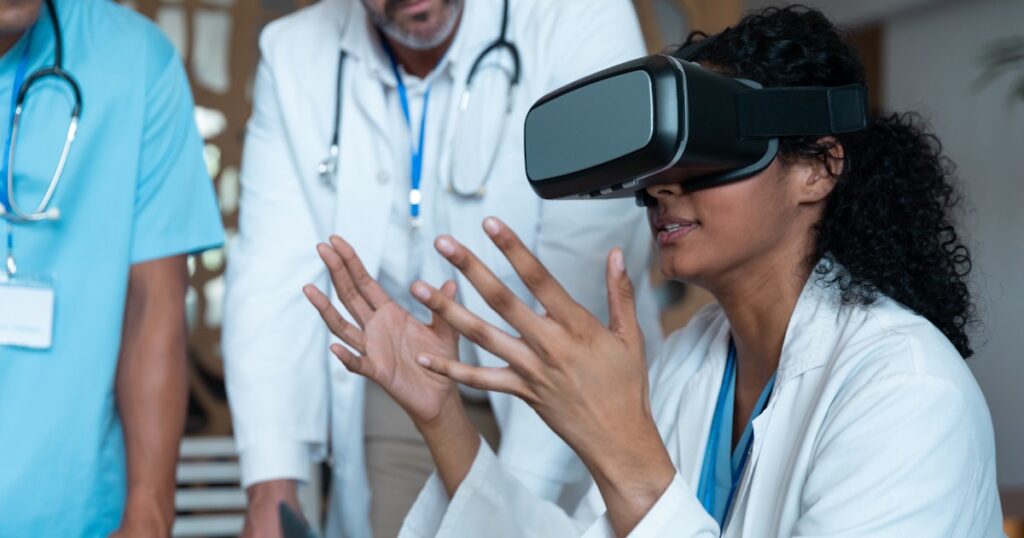
Virtual reality (VR) technology is rapidly transforming the healthcare landscape, offering innovative solutions that enhance patient care, medical training, and industry efficiency. Once primarily associated with gaming and entertainment, VR’s applications in medicine are proving to be game-changers, enabling practitioners to achieve better outcomes through immersive, interactive experiences. As this technology continues to advance, its potential to reshape the future of healthcare becomes increasingly evident, with new uses emerging across surgical procedures, patient empathy, pain management, rehabilitation, cognitive enhancement, and mental health treatment.
Enhancing Surgical Precision and Efficiency
Leading medical institutions are harnessing VR tools to improve surgical procedures significantly. For instance, George Washington University utilizes state-of-the-art VR platforms in neurosurgery and thoracic surgeries, allowing surgeons to virtually explore a patient’s anatomy before making an incision. This preoperative visualization enhances situational awareness and procedural accuracy, ultimately leading to better surgical outcomes. Additionally, patients and their families benefit from immersive simulations that clarify complex procedures, reducing anxiety and increasing understanding.
Research published in the Harvard Business Review demonstrates that VR training can boost surgical performance by over 230% compared to traditional methods, underscoring its efficacy in skill development. Similarly, UConn Health employs VR solutions from providers like PrecisionOS and Oculus to train orthopedic surgery residents. This approach offers repeated practice opportunities without the constraints of cadaver availability, saving both time and resources while elevating surgical proficiency. For more insights into how immersive training is transforming medical education, visit this resource.
Fostering Greater Empathy and Patient Understanding
VR is also used as a powerful tool to cultivate empathy among healthcare professionals. Some hospitals incorporate simulations that allow doctors to experience what their patients endure, such as visualizing the world through the eyes of someone with dementia or Parkinson’s disease. These immersive experiences provide valuable perspectives, fostering compassion and improving patient-provider interactions.
Studies have shown that VR-based training enhances understanding of age-related health issues, especially in aging populations with sensory impairments or cognitive decline. By simulating real-life conditions, clinicians can better grasp the challenges faced by their patients, leading to more tailored and empathetic care. These advancements play a crucial role in training new generations of healthcare workers to deliver more compassionate treatment. To explore how emerging technologies are bridging gaps in patient care, see this detailed analysis.
Alleviating Pain and Anxiety
VR has demonstrated significant promise in pain management by diverting patients’ attention away from distressing sensations. Cedars-Sinai Hospital reports that immersive VR experiences can reduce pain perception by more than 24%, making it a valuable adjunct to traditional therapies. This technique is especially useful for women in labor, individuals undergoing acute or chronic pain treatments, and pediatric patients.
Children facing medical procedures often experience less distress when they are immersed in engaging digital worlds or games, which distract them from their pain and fears. A study from the University of Washington found that burn patients reported experiencing considerably less pain when distracted by VR, with brain scans confirming reduced pain-related activity. This approach not only minimizes reliance on pharmaceuticals but also improves the overall patient experience during treatment.
Interesting:
- How ai is revolutionizing modern healthcare practices
- How artificial intelligence is revolutionizing healthcare delivery
- How cloud computing is revolutionizing healthcare delivery
- Transforming healthcare with virtual reality top 14 advantages
- How artificial intelligence is transforming modern healthcare
Advancing Physical Therapy and Rehabilitation
VR is proving to be an effective aid in physical therapy, especially for patients recovering from injuries or surgeries. Programs incorporating motion-sensitive gaming enable precise movements, encouraging patients to complete exercises with greater motivation. Therapists can customize settings to suit individual needs, making rehabilitation more engaging and effective.
Furthermore, VR allows patients to practice everyday activities in a safe, controlled virtual environment—such as grocery shopping or household chores—which enhances real-world functional skills. For children with cerebral palsy, VR-based therapy has shown to significantly improve motor control and coordination, demonstrating its value in pediatric rehabilitation. To learn how digital health innovations are improving recovery outcomes, see this resource.
Supporting Cognitive and Memory Enhancement
Innovative startups like MyndVR and Rendever are leveraging VR to help seniors boost their memory, cognitive function, and social engagement. Clinical studies reveal that immersive VR interventions can improve attention, executive functioning, and overall cognition among older adults with mild cognitive impairment or dementia. These experiences also promote social interaction, reducing feelings of loneliness and isolation.
In the context of neurological rehabilitation, VR enhances traditional therapies by providing multisensory stimuli, which can strengthen neural pathways post-stroke or in conditions like multiple sclerosis (MS). This integrated approach leads to more comprehensive recovery strategies, capitalizing on the brain’s plasticity and capacity for adaptation.
Addressing Mental Health Challenges
VR therapies are increasingly employed to treat mental health issues such as anxiety, trauma, and phobias. For example, virtual exposure therapy allows patients to confront fears—like heights or public speaking—in a controlled, safe environment. This method has shown remarkable results; one study noted a 68% reduction in fear of heights following VR-based treatment.
Mental health professionals also utilize VR to help patients with depression and post-traumatic stress disorder (PTSD), offering immersive environments that facilitate exposure and cognitive restructuring. As the technology evolves, its role in psychological treatment continues to expand, offering new hope for more effective and accessible therapies. For further understanding of how artificial intelligence and immersive tech are transforming healthcare practices, visit this comprehensive guide.
A Future of Endless Possibilities
The integration of virtual reality into healthcare is only beginning. With an annual growth rate of over 30%, VR’s influence is poised to expand across various medical fields, enhancing patient outcomes and operational efficiencies. As research uncovers new applications, the potential for VR to revolutionize healthcare remains immense, promising a future where immersive technology becomes an integral part of medical practice and industry transformation.