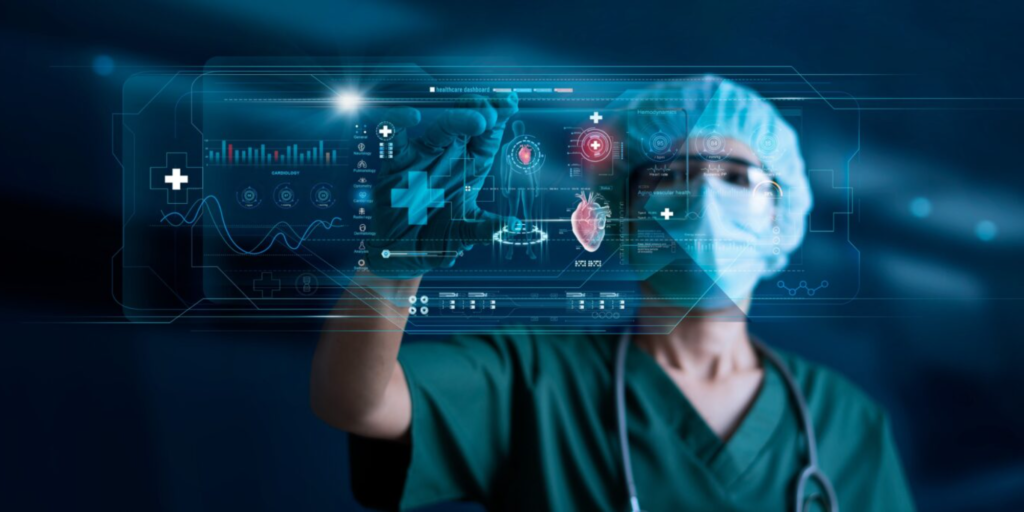
The integration of artificial intelligence (AI) into healthcare is transforming the industry at an unprecedented pace. From enhancing diagnostic accuracy to streamlining administrative processes, AI-driven technologies are reshaping how medical professionals deliver care and how patients experience healthcare services. As innovations continue to emerge, understanding these advancements becomes essential for professionals and patients alike. This article explores five key ways AI is actively improving healthcare systems worldwide, making treatments more effective, personalized, and accessible.
1. Robotics Enhancing Surgical Precision and Patient Monitoring
Robotics in healthcare is no longer confined to specialized laboratory environments; it now plays a vital role in day-to-day clinical practice. Modern robotic systems assist surgeons during complex procedures, offering greater precision and control. These systems often operate under the direct supervision of medical professionals, executing preprogrammed tasks or assisting in delicate maneuvers. The advent of surgical robots has expanded the possibilities for minimally invasive surgeries, reducing recovery times and improving outcomes.
Beyond the operating room, AI-powered wearable devices and sensors are revolutionizing patient monitoring. Devices such as smartwatches and fitness trackers incorporate AI and robotics to continuously track vital signs like heart rate, activity levels, and fall detection. These tools enable healthcare providers to access real-time data, facilitating early diagnosis, ongoing management of chronic illnesses, and personalized health recommendations. For example, wearable orthotics and prosthetics utilize sensors and deep learning algorithms to assist mobility and rehabilitation, supporting improved independence for individuals recovering from injuries or stroke.
The convergence of virtual reality (VR) and augmented reality (AR) with robotics further enhances surgical planning and training. VR enables surgeons to simulate procedures in a risk-free environment, refining techniques before actual operations. AR overlays digital information onto real-world views, assisting during surgeries by clarifying anatomy or highlighting critical structures. For more insights into how immersive technologies are changing medical training and treatment, visit virtual reality in medicine perspectives and features.
2. Natural Language Processing Facilitates Better Data Utilization
Natural Language Processing (NLP) is transforming healthcare documentation and research by enabling computers to interpret human language accurately. Historically, much of the clinical data—such as physician notes, patient histories, and lab reports—remained unstructured, limiting its usefulness. NLP algorithms can now analyze and extract meaningful insights from this data, integrating it into patient records for a comprehensive view of health status.
This capability allows healthcare providers to identify patterns, detect errors such as improper coding, and uncover subtle details that might otherwise be overlooked. As a result, patient care becomes more personalized and informed. Furthermore, NLP accelerates research by sifting through vast amounts of clinical data, helping identify trends and potential treatment breakthroughs more efficiently. Pharmaceutical companies leverage NLP to analyze scientific literature and clinical trial data, leading to faster development of new therapies. To explore the broader applications of AI in medical research and data analysis, check out AI-driven insights in healthcare.
3. Machine Learning Supports Predictive Diagnostics and Personalized Treatment
Machine learning, a subset of AI, enables systems to learn from data and improve over time without explicit programming. In healthcare, this means analyzing large datasets—from electronic health records to imaging scans—to detect patterns and make predictions. For instance, machine learning algorithms can identify early signs of diseases such as cancer or cardiovascular conditions, often before symptoms appear, enabling proactive interventions.
Interesting:
This technology also underpins the concept of precision medicine, tailoring treatments based on individual genetic makeup and health history. Predictive models help determine the most effective therapies, minimize adverse effects, and optimize resource allocation. An example is using machine learning to differentiate between healthy and cancerous tissues in medical imaging, enhancing diagnostic accuracy. Additionally, AI systems are developing to assess physical therapy progress and customize recovery programs, exemplifying the broad potential of this technology to improve patient outcomes. As this field advances, systems like TikTalk are providing personalized speech therapy for children, demonstrating AI’s capacity to adapt to individual needs.
4. Enhancing Patient Engagement Through AI-Driven Tools
AI is also revolutionizing patient interaction with healthcare systems, making care more accessible and engaging. Chatbots, for example, have evolved from simple scripted systems to sophisticated virtual assistants capable of providing symptom checks, scheduling appointments, and answering medical questions around the clock. These tools enhance convenience and ensure patients receive timely information, reducing unnecessary visits and streamlining workflows.
Innovations like Mend’s Virtual Waiting Room (VWR) improve the patient experience by offering educational content and wellness videos during wait times. Moreover, AI-powered platforms can utilize standard webcams to measure vital signs such as blood pressure and heart rate in real-time while patients wait. This transforms idle waiting periods into productive health monitoring sessions, facilitating smoother transitions to appointments and reducing patient frustration. These advancements demonstrate how AI fosters higher patient satisfaction and engagement, which are critical for effective health management.
5. Automating Administrative Tasks to Improve Efficiency
While often overlooked, administrative automation is a crucial aspect of AI’s impact on healthcare. Tasks such as billing, appointment scheduling, and record management are time-consuming but essential for smooth operations. AI-driven solutions, particularly robotic process automation (RPA), are capable of executing these repetitive tasks efficiently, freeing up valuable time for healthcare professionals.
Studies indicate that up to 40% of healthcare support staff activities and 33% of practitioner tasks could benefit from automation. RPA systems can handle patient admissions, claims processing, and data entry with minimal errors and significantly faster turnaround times—sometimes reducing processing time by up to 85%. Such efficiencies not only cut costs but also enable medical staff to devote more attention to patient care and complex decision-making. As technology advances, automation will continue to streamline healthcare workflows, allowing providers to focus on their core mission: delivering human-centered, compassionate care. For further insights into how automation is shaping healthcare administration, visit VR and AR in healthcare.
—
Artificial intelligence’s role in healthcare is profound and growing. Its applications—from enhancing surgical precision to automating routine tasks—are making healthcare more effective, efficient, and patient-centered. As these technologies evolve, they promise to deliver even greater improvements, empowering healthcare providers and patients alike to achieve better health outcomes.