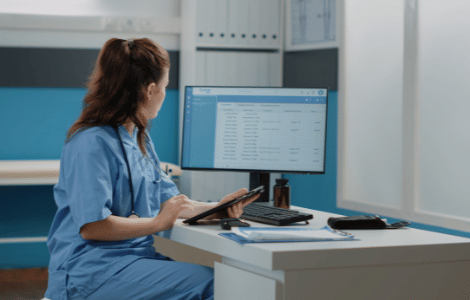
In today’s rapidly advancing healthcare environment, digital technology plays a vital role in how patient information is collected, stored, and shared. Among the most prominent systems are Electronic Health Records (EHRs) and Electronic Medical Records (EMRs). Although these terms are often used interchangeably, they serve distinct functions and have different implications for healthcare delivery. Understanding these differences is essential for healthcare providers, administrators, and patients alike, as both systems significantly influence medical practice, data security, and overall patient outcomes.
An in-depth look at how EHRs and EMRs compare reveals their unique roles in modern medicine, the advantages they offer, and their importance in fostering efficient, safe, and coordinated care. As healthcare continues to evolve, the integration of advanced technologies such as virtual reality in medicine perspectives and features is transforming how medical professionals are trained and how patient data is managed, ultimately leading to better health outcomes. Additionally, exploring how innovations like VR and AR in healthcare, pharmaceuticals, and sports are shaping future practices underscores the importance of adopting comprehensive digital solutions.
What Is an EHR
An Electronic Health Record (EHR) is a comprehensive digital repository that consolidates a patient’s medical history, lab results, imaging reports, medication lists, and other vital health information. Unlike traditional paper records, EHRs are designed to facilitate the seamless sharing of data across various healthcare providers and institutions. This capability enhances coordination and continuity of care, especially in complex or chronic cases where multiple specialists are involved. EHRs are predominantly used by larger healthcare organizations, such as hospitals and integrated health systems, which require a unified, accessible platform for managing patient data across different departments and locations.
The importance of EHRs extends beyond simple record-keeping. They enable healthcare professionals to access real-time patient information, which can significantly improve decision-making and treatment accuracy. For example, EHRs can integrate with clinical decision support tools that alert providers to potential medication interactions or allergies. As technology advances, EHRs are increasingly incorporating features like predictive analytics and patient portals, empowering individuals to take an active role in managing their health. For a glimpse into how emerging technologies are transforming healthcare, explore the potential of virtual reality in medicine.
What Is an EMR
An Electronic Medical Record (EMR) is a digital version of a patient’s chart stored within a single healthcare provider’s system. It captures essential clinical data, such as diagnoses, medical history, treatments, and medications, but typically remains confined to one organization or practice. Unlike EHRs, EMRs do not facilitate easy sharing of information between different healthcare providers, which can limit their usefulness in coordinated or multi-provider environments. EMRs are often utilized by smaller clinics, private practices, or specialized healthcare providers who do not need to exchange data frequently with other entities.
While EMRs lack the broad interoperability of EHRs, they offer several advantages. Customizability allows healthcare organizations to tailor the system to their specific operational needs, streamlining workflow and data management. EMRs also tend to be more cost-effective, making them accessible for smaller practices or clinics with limited budgets. Additionally, because EMRs are digital and restricted to authorized personnel, they provide a secure environment for sensitive patient information, reducing the risk of breaches.
EHR vs. EMR: Benefits
Benefits of EHR
The primary advantage of EHR systems lies in their ability to facilitate comprehensive data sharing across healthcare networks. This interconnectedness allows for more informed and timely treatment decisions by providing clinicians with access to a patient’s complete medical history, regardless of where they received care previously. Enhanced communication between providers leads to better care coordination, especially for patients with chronic conditions or complex health needs. Patients also benefit from increased autonomy, as many EHR systems include patient portals that enable them to view their health records, upcoming appointments, and test results at their convenience.
Furthermore, as the technology matures, EHRs are poised to eliminate paper records entirely, reducing administrative burdens and minimizing errors caused by manual data entry. For instance, automatic alerts for allergies or drug interactions help mitigate adverse events. According to the American Hospital Association, widespread adoption of certified EHRs—used by 96% of non-federal acute care hospitals—is transforming healthcare delivery, making it more efficient and safer overall. The integration of virtual reality in medicine exemplifies how digital tools are enhancing diagnostic and training processes, paving the way for more innovative care solutions.
Benefits of EMR
Although EMRs lack the extensive data-sharing capabilities of EHRs, they still offer significant advantages tailored to smaller or less integrated practices. Customization options enable healthcare providers to optimize workflows and focus on specific clinical needs, resulting in streamlined patient management. Cost efficiency is another key benefit, as EMR systems typically require lower investment compared to comprehensive EHR platforms, making them an attractive choice for smaller organizations.
Security is a critical concern in healthcare, and EMRs excel by limiting access to authorized personnel only. Digital storage reduces the risks associated with physical documents, such as loss or damage, and ensures that patient data remains confidential. As technology advances, EMRs continue to improve in functionality, offering robust data management tools that support accurate and complete patient records within a controlled environment.
Interesting:
EHR vs. EMR: Importance
The significance of EHR and EMR systems in healthcare continues to grow. According to data from the American Hospital Association, a vast majority of healthcare providers now rely on certified digital record-keeping systems to improve patient safety, care quality, and operational efficiency. Both types of systems are instrumental in managing population health, reducing costs, and preventing chronic diseases such as heart disease, COPD, and diabetic retinopathy. The ability to share critical patient information across different providers is vital for early detection and intervention, which can significantly improve health outcomes.
The adoption of integrated digital records underscores the importance of evolving healthcare infrastructure to support innovations like training the surgeons of tomorrow with virtual reality. As digital health tools become more sophisticated, the interoperability and comprehensive data management provided by EHRs and EMRs will remain central to advancing medical practice and patient safety.
How the IRIS Solution Can Streamline Patient Care
Diabetic retinopathy, a leading cause of blindness among adults, can be effectively managed with early detection and intervention. The IRIS platform exemplifies how advanced digital solutions can enhance patient care by integrating seamlessly with existing EHR systems. Through high-quality fundus photography, healthcare providers can perform retinal screenings and securely upload images to the IRIS Reading Center (IRC). There, licensed ophthalmologists remotely analyze retinal images for signs of diabetic retinopathy.
Once the screening is complete, the results are automatically transmitted back to the patient’s medical record within the EHR system, allowing clinicians to make informed decisions swiftly. This process not only accelerates diagnosis but also significantly reduces the risk of vision loss—by as much as 90%—by enabling early treatment. Such innovations highlight the importance of adopting comprehensive healthcare applications, which require attention to the seven critical factors in healthcare app development, to ensure safety, security, and usability.
Frequently Asked Questions
Do Hospitals Use EHR or EMR?
Hospitals typically utilize either an EHR or EMR depending on their operational scope and needs. EHRs are favored in larger healthcare settings because they provide an extensive, integrated view of a patient’s health information across multiple providers and facilities. This broad access supports coordinated care and complex treatment plans. Conversely, smaller hospitals or outpatient clinics may rely on EMRs, which are sufficient for managing patient data within a single organization without extensive sharing requirements. Both systems are crucial for managing digital health information efficiently.
What Is the Difference Between ERP and EMR?
Enterprise Resource Planning (ERP) systems and EMRs serve different functions within healthcare organizations. ERP systems focus on managing the organization’s operational aspects, including financials, inventory, staffing, and billing. They provide a centralized platform to streamline business processes across departments. On the other hand, EMRs concentrate solely on clinical data management—recording patient histories, diagnoses, treatments, and medications. While ERPs optimize administrative efficiency, EMRs are essential for ensuring accurate, accessible patient care documentation.
Is Epic an EMR or EHR?
Epic Systems is a leading provider of EHR software designed for healthcare organizations of all sizes. Their solutions facilitate comprehensive management of patient information, including registration, clinical documentation, prescribing, and scheduling. Epic’s platform exemplifies modern EHR systems that support interoperability and data sharing across different healthcare entities, enabling improved care coordination and operational efficiency.
—
Start improving your healthcare data management today. Learn how integrating solutions like the IRIS platform can enhance patient outcomes and streamline clinical workflows. For expert guidance, schedule a consultation or explore more about how digital innovations are transforming medicine.