


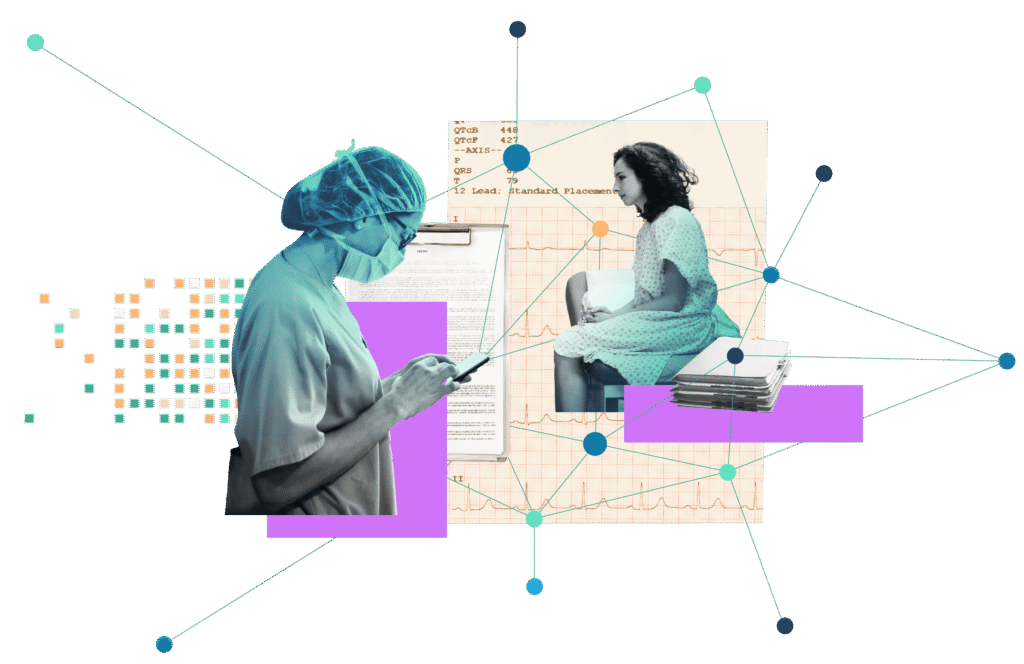
Advancements in artificial intelligence are ushering in a new era of healthcare, transforming everything from patient interactions to medical research and education. AI’s integration into medicine promises to enhance diagnostic accuracy, streamline administrative tasks, and foster innovative treatment approaches. As these technologies evolve, they hold the potential to reshape the entire healthcare landscape, making it more efficient, equitable, and responsive to individual patient needs.
—
The Role of AI in Enhancing Clinical Practice
In the early 2000s, medical students like Adam Rodman relied on traditional methods such as searching through physical libraries and copying research papers to gather necessary information for patient care. Today, thanks to AI-powered tools like OpenEvidence—developed partly by Harvard Medical School faculty—clinicians can access comprehensive medical literature within seconds through their smartphones. These tools allow doctors to query specific symptoms and diseases, receive summarized findings, and obtain relevant sources for further study—all while engaging with patients face-to-face. Such rapid access to evidence-based information exemplifies how AI accelerates decision-making and supports personalized care.
The potential of these innovations extends beyond quick data retrieval. For instance, virtual reality (VR) and augmented reality (AR) applications are increasingly used in the healthcare sector to improve training, patient management, and surgical procedures. Explore how immersive technologies are revolutionizing training for surgeons and other medical professionals in this comprehensive guide.
Most experts agree that the integration of large language models (LLMs) will drastically reshape healthcare delivery. These models could influence doctor-patient relationships, reduce administrative burdens, and enhance medical research. Nonetheless, ethical considerations, such as data biases and AI hallucinations—where systems generate false information—must be addressed to ensure safe and effective implementation.
—
Transforming Medical Education and Training
AI’s capacity to simulate complex cases is transforming how future physicians learn and refine their skills. Virtual reality platforms now allow medical students to practice surgeries and diagnose conditions in realistic, risk-free environments. This immersive training supports the development of critical thinking and decision-making skills, moving beyond rote memorization to higher levels of cognitive analysis. For example, AI-driven simulation tools enable students to navigate rare or complicated cases that they might not encounter during traditional clinical rotations.
Training the surgeons of tomorrow with virtual reality is becoming an essential component of modern medical education. These systems provide instant feedback, allowing students to improve their techniques and understanding continuously. For a deeper look into how VR is shaping surgical training, visit this detailed overview.
Furthermore, AI can personalize learning experiences for medical students and residents, identifying gaps in knowledge and tailoring educational content accordingly. As AI continues to develop, its role in medical education will become even more integral, fostering a generation of highly skilled, adaptable healthcare professionals.
—
AI’s Impact on Healthcare Administration and Patient Outcomes
Beyond clinical and educational settings, AI is streamlining administrative tasks, reducing errors, and enhancing healthcare delivery at a systemic level. Automated documentation systems, such as ambient scribes, can listen to patient visits and generate accurate clinical notes in real time. This automation alleviates the administrative burden on physicians, allowing them to dedicate more time to direct patient care, which is often cited as a remedy for burnout.
AI also offers promising avenues for improving diagnostic accuracy. Recent studies have shown that large language models can outperform individual physicians in certain diagnostic tasks, suggesting that AI may serve as an effective second opinion tool. However, the integration of AI into routine practice requires careful training and oversight to prevent over-reliance on these systems, especially given their propensity for hallucinating or fabricating information. For guidance on developing effective healthcare applications that incorporate AI responsibly, consult this expert advice.
Interesting:
AI’s ability to analyze vast amounts of data also opens new frontiers in patient safety. For example, AI systems can flag medication-related issues and adverse drug interactions more accurately than traditional methods, reducing hospital visits due to preventable harm. Nonetheless, caution must be exercised to prevent biases rooted in data, which can perpetuate disparities in care—for example, skin cancer detection algorithms that underperform on darker skin tones. Addressing these biases requires deliberate efforts to diversify datasets and design human-centered AI solutions, as emphasized by experts in the field.
—
Addressing Bias and Ethical Challenges
Despite AI’s transformative potential, it is critical to recognize and mitigate risks associated with biases in data and technology. Many AI models are trained on datasets predominantly reflecting societal biases, which can reinforce disparities in healthcare access and quality. For instance, studies have shown that some diagnostic tools perform poorly on non-English speaking populations or individuals with darker skin, highlighting the importance of inclusive data collection and model validation.
Designing human-centered AI systems that predict how users might err is essential to prevent unintended consequences. Drawing lessons from aviation and nuclear safety, experts advocate for interdisciplinary collaboration involving psychologists, cognitive scientists, and anthropologists to develop robust, reliable AI solutions for healthcare. Ensuring diversity in clinical trials and datasets, such as the extensive Beth Israel MIMIC database, is a step toward more equitable AI-driven care.
As Leo Celi notes, understanding the underlying data artifacts and social contexts is vital for creating AI systems that truly serve all populations. Building models that can anticipate human mistakes and adapt accordingly will be fundamental to realizing AI’s full potential in medicine.
—
The Future of AI in Scientific Discovery and Education
In biomedical research, AI models like Procyon are accelerating the understanding of complex biological processes, such as protein folding and function. These insights enable researchers to predict molecular interactions and design new drugs more efficiently, potentially revolutionizing treatment development. AI’s capacity to generate hypotheses and analyze extensive scientific literature positions it as a future research collaborator, transforming the pace and scope of scientific progress.
In medical education, AI-driven tools are creating personalized learning environments, virtual patient simulations, and intelligent tutors that adapt to individual learners. These innovations aim to prepare future physicians for a rapidly evolving landscape, emphasizing adaptability and continuous learning. For example, Harvard Medical School is developing AI-powered virtual patients and supplemental courses to enhance clinical training, fostering a new generation of agile, tech-savvy clinicians.
The overarching challenge remains in balancing technological innovation with ethical considerations, ensuring AI enhances human judgment rather than replacing it. As Bernard Chang emphasizes, AI holds the promise of freeing physicians to focus more on the human elements of care, fostering deeper connections and more compassionate practice.
—
Conclusion
AI’s integration into medicine is poised to redefine healthcare at every level—from individual patient interactions to global research efforts. While the potential benefits are vast, careful consideration of biases, ethical standards, and training must guide its development. As we stand on the brink of this technological revolution, it is crucial to harness AI’s capabilities responsibly, ensuring it serves as a powerful tool for better health outcomes and medical advancement.
For comprehensive guidance on developing AI-driven healthcare solutions, see this expert resource. Embracing innovation while safeguarding equity and safety will determine how successfully AI can fulfill its promise in transforming medicine.