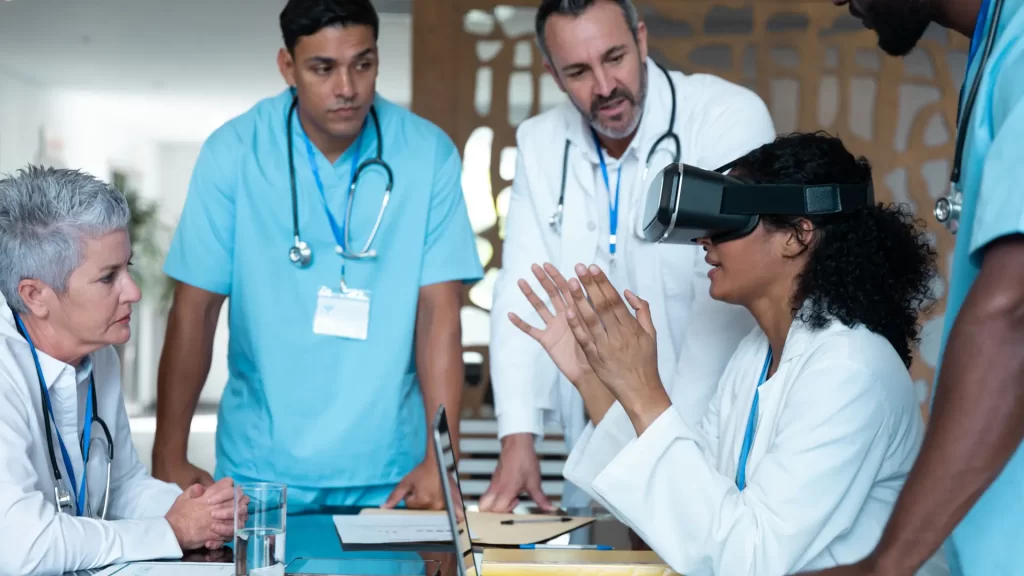
Healthcare training is evolving rapidly, driven by technological advancements that reshape how medical professionals acquire vital skills. As the demand for high-quality, scalable, and safe training methods grows, virtual reality (VR) emerges as a transformative tool capable of enhancing learning outcomes and ensuring better patient care. This cutting-edge approach offers immersive, hands-on experiences that were previously impossible or impractical, opening new horizons for medical education and professional development.
The Growing Role of VR in Healthcare Education
According to EDUMED, immersive technologies like VR and augmented reality (AR) are swiftly becoming essential components in delivering effective healthcare training. These tools enable learners to experience realistic scenarios within a virtual environment, creating a safe space to practice procedures, soft skills, and emergency responses without risking patient safety or incurring high costs. VR’s ability to simulate complex medical situations makes it an invaluable asset for training healthcare workers at all levels.
Research from the NIH National Library of Medicine highlights that VR-based training surpasses traditional methods in several key areas. A meta-analysis of 21 clinical trials revealed that VR enhances learners’ accuracy, confidence, and retention—finding improvements in 74% of studies—while practitioners trained with VR demonstrated higher procedural precision in 87% of cases. These promising results have led market analysts to predict that the extended reality (XR) sector within healthcare will experience an impressive annual growth rate of 22.5% over the next five years, reflecting its increasing adoption and effectiveness.
Benefits of VR-Enhanced Healthcare Training
The advantages of virtual reality extend across various facets of healthcare education. VR allows practitioners to develop essential skills in a risk-free environment, honing technical competencies before working with real patients. This is especially critical in high-stakes fields like surgery, where precision and confidence are paramount. VR modules can be tailored to individual learning curves, providing personalized feedback and targeted practice opportunities.
Moreover, VR excels at cultivating soft skills such as empathy, communication, and emotional resilience. For example, simulations where providers interact with virtual patients exhibiting age-related conditions like hearing loss or macular degeneration foster greater understanding and compassion. Such experiences are vital for improving patient-provider interactions and overall care quality. Additionally, VR’s scalability means that training can be delivered consistently across diverse settings—rural clinics, underserved communities, or large hospital networks—ensuring uniform standards of competence.
Training Surgeons with Virtual Reality
Surgeon training is perhaps one of the most impactful applications of VR in healthcare. The technology’s immersive nature allows aspiring surgeons to practice complex procedures repeatedly in a controlled environment, significantly reducing the risk associated with real-life learning curves. Leading institutions like Johns Hopkins School of Nursing utilize VR for training in resuscitation, anesthesia management, and pediatric care, while Mass General Hospital employs VR to enhance orthopedic surgical skills.
VR systems provide immediate, objective feedback on performance, enabling learners to identify areas for improvement. This iterative process accelerates skill acquisition and boosts confidence. In neurosurgery and thoracic procedures, VR simulations help surgeons visualize intricate anatomy before operating, improving situational awareness and surgical precision. As VR technology continues to advance, its integration into surgical education promises safer, more effective patient outcomes.
Empowering Nurses Through Virtual Training
The COVID-19 pandemic accelerated the adoption of remote and virtual training methods, benefiting nurses who often face high demands and limited access to hands-on clinical experience. VR offers a flexible, engaging platform for skill development, allowing nurses to practice procedures like catheter insertion, medication administration, and emergency response from anywhere. At Robert Morris University, gamified VR modules enable students to perform multiple procedures within a limited timeframe, resulting in increased practice time and higher skill proficiency.
Organizations such as AdventHealth leverage immersive learning solutions to train nurses across various hospitals, with reports indicating increased confidence in clinical assessments and medication management after VR sessions. As the nursing workforce continues to expand and evolve, VR-based training will be instrumental in standardizing education, reducing disparities, and ensuring readiness for diverse clinical scenarios.
Interesting:
Enhancing Soft Skills and Patient Interactions
While technical expertise is crucial, the significance of soft skills like empathy, communication, and bedside manner cannot be overstated. VR provides an innovative approach to cultivating these attributes. For instance, Stanford Children’s Hospital collaborated with Strivr to develop VR scenarios that help physicians practice difficult conversations with families of critically ill children, with 95% of participants expressing willingness to repeat the training.
Simulating age-related conditions such as hearing impairment or visual loss enables healthcare providers to experience firsthand the challenges faced by patients, fostering empathy. This immersive approach benefits not only doctors but also front-line staff, including receptionists and billing personnel, who interact regularly with patients and their families. Such training enhances overall patient experience and promotes compassionate care.
Standardizing Assessment and Feedback
A consistent challenge in medical education is objectively evaluating learner performance. Traditional assessment methods are often subjective and prone to bias, making it difficult to accurately measure skill development over time. VR addresses this issue by providing standardized metrics on performance, engagement, and decision-making through advanced analytics. Strivr’s platform, for example, tracks usage patterns, proficiency levels, and emotional responses, offering a comprehensive view of learner progress.
These insights enable educators to tailor training programs more effectively and predict future performance. Reliable, data-driven assessments ensure that healthcare professionals are well-prepared before entering high-pressure environments, ultimately improving patient safety and clinical outcomes.
The Future of Healthcare Training with VR
As VR technology becomes more accessible and affordable, its integration into healthcare education is set to expand further. When used alongside traditional training methods, VR enriches learning experiences, making them more interactive, scalable, and effective. The potential applications are vast—from preoperative planning and patient education to mental health therapy and beyond.
For additional insights into the role of artificial intelligence in healthcare training, this resource explores why AI is increasingly vital in delivering personalized and efficient medical education. Similarly, exploring immersive therapy reveals how virtual environments are revolutionizing mental health treatments, complementing the training of compassionate healthcare providers.
Embracing VR in healthcare education not only enhances skill acquisition but also amplifies the overall quality of care, making it a cornerstone of future medical training strategies. To stay ahead in this rapidly evolving field, institutions must consider integrating immersive solutions that support continuous learning and adaptability.
—
Note: For more comprehensive guidance on safeguarding patient data in digital health initiatives, visit this authoritative resource.