The integration of advanced virtual reality (VR) systems into medical practice is transforming the way surgeons plan, execute, and communicate about complex procedures. By combining cutting-edge imaging techniques with immersive 3D visualization, healthcare providers can enhance surgical precision, improve patient understanding, and boost overall safety. This technological leap not only benefits medical professionals but also offers reassurance to patients facing serious interventions, making the process more transparent and less intimidating.
How VR is Enhancing Surgical Planning and Training
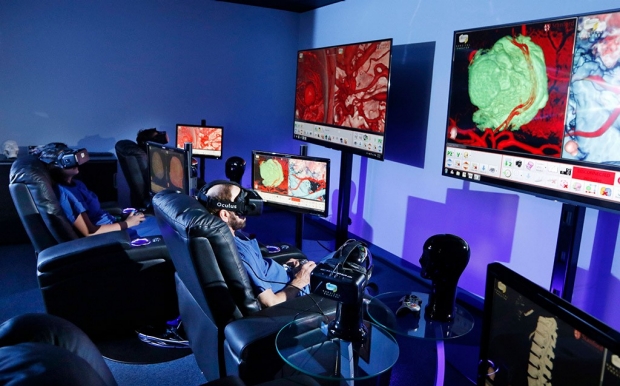
Stanford Medicine has adopted innovative software that synthesizes data from magnetic resonance imaging (MRI), computed tomography (CT), and angiograms to produce detailed three-dimensional models of the brain. These models can be manipulated in a virtual space, much like a video game, allowing surgeons and residents to explore intricate anatomy in a highly interactive manner. This approach is especially valuable in neurovascular cases, such as aneurysm repairs, where understanding the spatial relationships of blood vessels is crucial.
The system is also instrumental in training residents. In dedicated simulation rooms, trainees wear VR headsets and are guided by instructors represented as avatars. They can examine patient-specific models, highlighting arteries, bones, and tissues to comprehend the complexity of each case. These immersive sessions enable future surgeons to rehearse procedures in a realistic environment, improving their skills before operating on actual patients. For more details on how AI-driven tools are transforming healthcare, visit mhealthstack.info.
Improving Surgical Outcomes with 3D Visualization
Surgeons benefit from the detailed, three-dimensional imagery during preoperative planning. Unlike traditional 2D scans, these models allow clinicians to visualize the exact location of abnormalities and critical structures, reducing the risk of damaging vital areas like motor or sensory regions. Dr. Gary Steinberg, a leading neurosurgeon at Stanford, emphasizes that such detailed visualization helps tailor each operation to the individual anatomy, enhancing precision and safety.
Intraoperatively, VR systems can overlay these 3D images onto real-time video feeds, giving surgeons a comprehensive view during procedures. This augmented perspective enables more accurate navigation within the brain, which is especially important when dealing with delicate structures. As Dr. Steinberg notes, “The ability to reconstruct anatomy in three dimensions allows us to approach tumors and aneurysms with greater confidence and fewer surprises.” For insights into the broader applications of AI in the medical field, see mhealthstack.info.
Interesting:
Educating Patients and Enhancing Communication
One of the most impactful uses of VR in medicine is patient education. When patients can see a three-dimensional image of their own brain or spine, their understanding of the condition improves significantly. Malie Collins, a senior program lead at Stanford, explains that bringing a mobile VR unit into examination rooms allows patients—especially young individuals or non-English speakers—to directly view and comprehend their pathology. This immersive experience often alleviates anxiety and fosters trust.
Furthermore, the ability to download and share these images gives patients a tangible understanding of their health status. Traditionally, doctors relied on physical models or verbal explanations, which could be abstract or confusing. Now, VR provides an immersive, personalized view that clarifies complex medical issues. The technology primarily focuses on the brain and spinal cord because these organs are relatively stable and suitable for detailed imaging, though future advancements may extend to other parts of the body. For more on the expanding role of AI in healthcare, consider exploring servreality.com.
The Future of Surgical Precision and Patient Confidence
The detailed three-dimensional imagery offered by VR technology surpasses conventional methods, providing surgeons with an unprecedented level of detail during operations. Dr. Steinberg highlights that matching VR models with microscopic views during surgery enhances accuracy and confidence. Some patients have even chosen Stanford over other hospitals solely because of the immersive technology, which significantly improves their understanding of upcoming procedures.
For patients like Sandi Rodoni, this technology offers reassurance. Seeing her aneurysm in the virtual model and understanding how her surgeon planned to repair it helped ease her fears. Her operation proceeded smoothly, and she was discharged within two days, with the aneurysm successfully treated. As these systems become more widespread, they promise to revolutionize not only surgical planning and training but also patient engagement and safety. To learn more about innovative AI applications across healthcare, visit mhealthstack.info.